


School Students from Almaty Develop an Acoustic Monitoring System to Protect Kazakhstan’s Nature
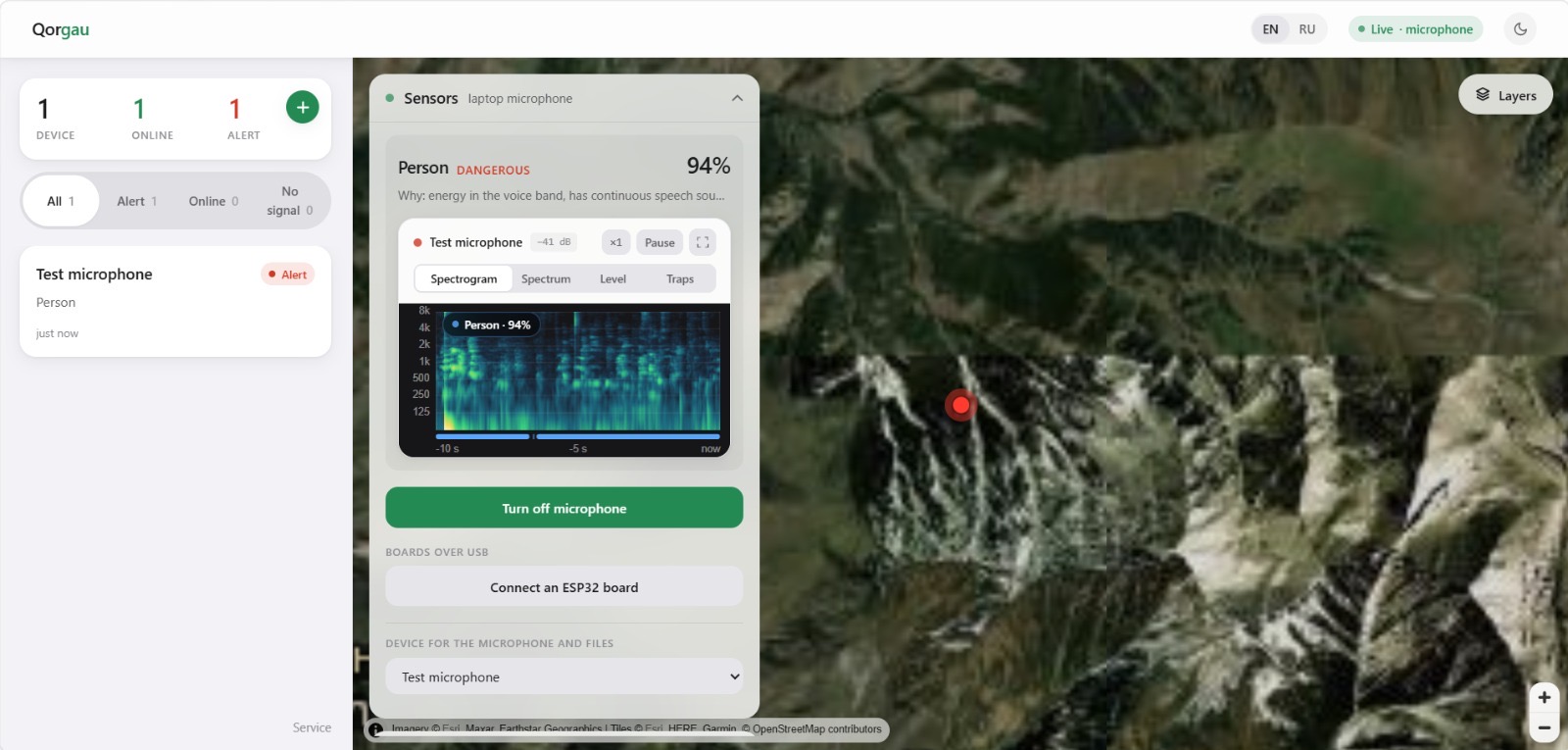
The PEAK school team from Almaty is developing QORGAU, an intelligent acoustic monitoring system designed to detect potential threats in Kazakhstan’s natural areas.
The project aims to address the challenges of monitoring large national parks and nature reserves, where continuous supervision is not always possible.
The device collects audio data using microphones and analyzes it with artificial intelligence. The team is working on recognizing sounds such as gunshots, vehicles, and chainsaws. When a potentially suspicious sound is detected, the system can send an alert with GPS coordinates via LoRa. This technology allows devices to exchange information even without regular internet access.
QORGAU is being developed as a complementary tool to existing monitoring systems, including camera traps. Unlike cameras, the system can analyze acoustic events occurring around the device.
During development, the team has created several prototypes. The third prototype incorporated GPS and the ability for multiple devices to operate as a distributed network, while sound analysis is now performed directly on the device.
During the development process, PEAK consulted experts from Princeton University, Cornell University, the University of Cambridge, the University of Jyväskylä, Imperial College London, Nazarbayev University, and Shakarim University. Following expert recommendations, the team also began working on training an artificial intelligence model based on BirdNET.
The team has also been in contact with specialists from Zhongar-Alatau State National Natural Park and is preparing for further field testing.
The developers continue to improve the system. The next steps include testing sound recognition accuracy, data transmission reliability, and device autonomy under real environmental conditions.
We wish Team PEAK every success in developing QORGAU and bringing their ideas to life!